
By Josh Yavelberg, PhD
Chief Solutions Architect, Flying Cloud Solutions | Learning Experience Designer | Consultant
At Look for the Learning, we love to feature reflections from our guests, listeners, and community members—especially when they connect the dots between life, leadership, and learning in ways that inspire us to think differently.
Today’s guest post comes from Josh Yavelberg, who brings a unique perspective on design thinking, problem-solving, and leadership—rooted in a creative practice you might not expect: drawing.
Drawing as a Way of Knowing: What Sketching Taught Me About Leadership, Agility, and Problem-Solving
I didn’t set out to be a designer, facilitator, or consultant. I started with a pencil.
Before I ever heard terms like “design thinking” or “wicked problems,” I learned to draw. But drawing, as I’ve come to realize, isn’t just about making pictures. It’s about making sense of things—of patterns, possibilities, relationships, and ideas that don’t always present themselves in a neat, linear way.
A Non-Linear Practice for a Non-Linear World
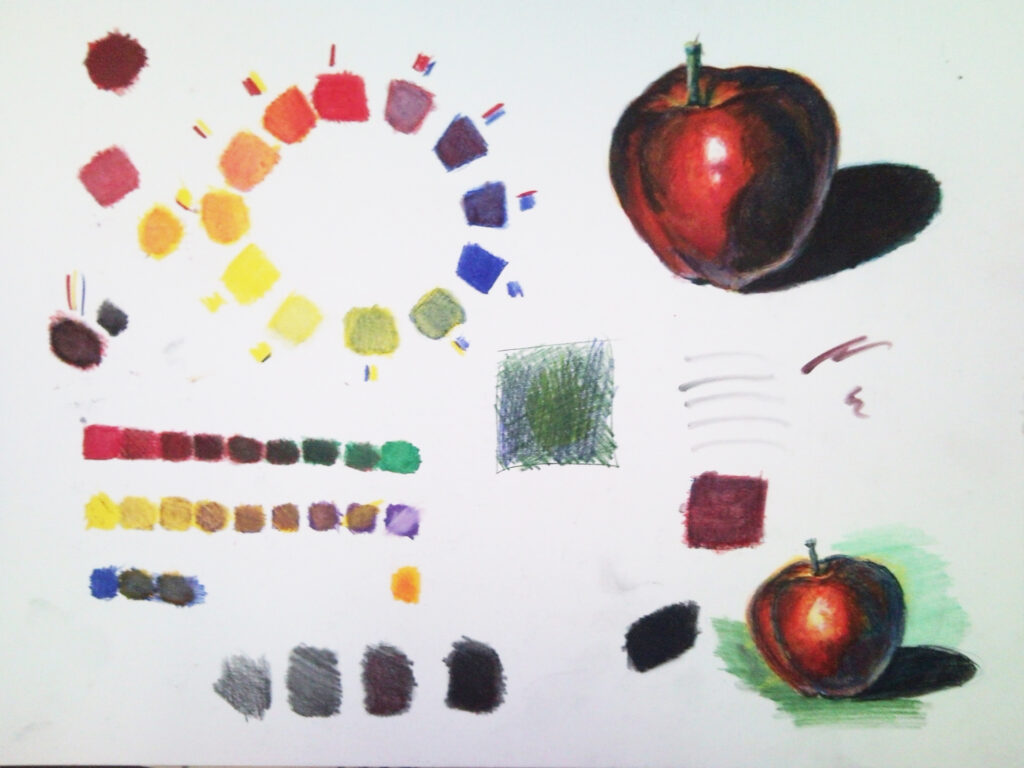
If you flip through any of my old sketchbooks, you won’t find clean, ordered sequences. You’ll find messy layers. Half-finished ideas. Notes scribbled sideways in the margins. Drawings that circle back to earlier pages. References to artists I studied years before, now viewed through new eyes.
Sketchbooks, like life and leadership, aren’t linear. They’re a living record of exploration—an ongoing dialogue between what I thought I knew and what I’m still figuring out. A place where observation meets reflection, where history meets new insight, and where seemingly unrelated ideas begin to connect.
Every mark I make is shaped by multiple factors—the surface I’m working on, the medium I choose, the pressure of my hand, the speed of the stroke. No two marks are exactly the same. And yet, each one builds toward something larger—a unique expression shaped by the conditions, the choices, and the willingness to stay in motion.
From Sketches to Solutions
Drawing taught me the value of iteration. A quick sketch is a prototype. A gesture drawing is an MVP. I learned early on that you can’t solve a problem by thinking alone—you have to put something down, see what it looks like, and respond to it.
This mindset extends far beyond the page. Whether I’m facilitating a strategy session, supporting a team navigating change, or helping leaders tackle systemic challenges, I bring that same studio practice with me. It’s a practice of moving ideas from messy to meaningful, of testing, pivoting, and learning in real time.
Staying Agile, Staying Curious
One of the most important lessons drawing taught me is that agility isn’t just a business buzzword. It’s a way of being. It’s the ability to hold multiple ideas at once, to shift perspective when the picture changes, and to recognize that the process is the product.
Drawing helps me stay curious when faced with ambiguity. It helps me connect dots that others might not see. And it reminds me that every solution—like every mark on the page—is shaped by a mix of influences: the past, the present, the materials at hand, and the people willing to engage in the creative mess of figuring things out together.
What’s your version of a sketchbook?
What practice helps you explore, reflect, and connect ideas in your life or leadership?
I’d love to hear your story. Share it in the comments or join us on the Look for the Learning podcast, where we explore how life shapes leadership—and how leadership shapes life.
About the Author
Josh Yavelberg, PhD, is Chief Solutions Architect at Flying Cloud Solutions, where he helps organizations design better learning experiences and tackle complex challenges. With a background in fine art, instructional design, and organizational consulting, Josh brings a unique blend of creativity and strategy to his work. He is also a frequent guest and co-creator in the Look for the Learning community.
Want to share your story?
We’re always looking for guest contributors who can reflect on how everyday experiences shape the way we learn and lead. Interested in contributing? Contact us here